
Why Family-Style Mealtimes Matter in Early Childhood
Why Family-Style Mealtimes Matter in Early Childhood
Reading time: 6 minutes
If you have ever watched a group of toddlers sitting around a table, carefully spooning food onto their own plates, passing a jug of water, and chatting between mouthfuls, you have witnessed one of the most powerful learning experiences in early childhood. Family-style mealtimes in early childhood settings are about so much more than food. They are a masterclass in independence, social skills, language, and self-regulation.
At Sonas Woodbridge, family-style mealtimes are a cornerstone of our daily program, and families often tell us they are amazed by what their child can do at the table.
What Are Family-Style Mealtimes?
Family-style mealtimes mean that food is placed in shared serving bowls and dishes at the centre of the table, and children serve themselves with support from educators. Rather than receiving a pre-plated meal, children choose what to put on their plate, how much to take, and when they have had enough.
Educators sit at the table with the children — eating the same food, modelling table manners, and engaging in conversation. It mirrors how families eat at home (at their best, anyway) and creates a warm, unhurried social experience.
The Research Behind Family-Style Dining
The benefits of family-style mealtimes are well-documented in early childhood research.
A study published in the Journal of the Academy of Nutrition and Dietetics found that children who serve themselves at mealtimes develop a better ability to self-regulate their food intake. They learn to recognise hunger and fullness cues, which is a protective factor against obesity.
The Australian Dietary Guidelines recommend that children are offered a variety of nutritious foods and allowed to determine how much they eat. Family-style mealtimes align perfectly with this approach — the adult decides what is offered, and the child decides how much they eat.
Research from Deakin University's Institute for Physical Activity and Nutrition found that shared mealtimes are associated with higher fruit and vegetable consumption, better dietary quality, and more positive attitudes toward food in young children.
7 Key Benefits of Family-Style Mealtimes
1. Builds Independence and Self-Help Skills
Scooping rice onto a plate, pouring water from a small jug, and using tongs to pick up vegetables are all complex fine motor tasks. Every mealtime is an opportunity for children to practise these skills in a real, meaningful context. At Sonas Woodbridge, even our youngest Swaylings (1-2 year olds) begin learning to serve themselves with age-appropriate support.
2. Develops Self-Regulation
When children choose their own portions, they learn to listen to their body's hunger and fullness signals. This is a critical life skill. Pre-plated meals teach children to eat what they are given; family-style meals teach them to eat what they need.
3. Encourages Adventurous Eating
Research consistently shows that children are more likely to try new foods when they have control over what goes on their plate. There is no pressure to eat everything — just an invitation to try. Seeing peers and educators enjoying different foods also provides powerful social modelling.
4. Builds Social Skills
Waiting your turn, saying "please" and "thank you," passing dishes, and engaging in table conversation are all social skills that children practise at every meal. For children in our family grouping model at Sonas Woodbridge, mealtimes also provide opportunities for older children to help younger ones — building empathy and leadership.
5. Supports Language Development
Mealtimes are rich language opportunities. Children learn food vocabulary, describe tastes and textures, share stories about their day, and practise conversational turn-taking. Educators intentionally use mealtimes to extend language: "This bread is crunchy. Can you hear the crunch? What else is crunchy?"
6. Creates a Sense of Belonging
Sitting together, sharing food, and being part of a mealtime community creates a powerful sense of belonging. In many cultures around the world, sharing a meal is one of the most important social rituals. For children transitioning into childcare, the familiarity of a shared mealtime can be deeply comforting.
7. Teaches Responsibility
Children help set the table, clear their plates, and wipe down surfaces. These are not chores — they are contributions. Children feel proud when they are trusted with real tasks, and this sense of responsibility supports their growing identity as capable, contributing members of their community.
What Family-Style Mealtimes Look Like at Sonas Woodbridge
At Sonas Woodbridge, mealtimes are treated as a valued part of the learning program, not just a break between activities.
The setup: Small tables are set with real plates, cups, and cutlery (age-appropriate, of course). Food is placed in serving bowls at the centre. Educators sit at the table with children.
The routine: Children wash their hands, find their seat, and wait for everyone to be ready. Educators guide the serving process, supporting younger children while encouraging independence in older ones. Conversation flows naturally — about the food, about their morning, about the butterfly they saw in The Garden.
The food: Our meals are prepared fresh, with a focus on nutrition, variety, and exposure to different flavours and textures. We follow Australian Dietary Guidelines and cater for all allergies and dietary requirements.
The culture: There is no rush. No "eat your vegetables or no dessert." No forcing. Just a warm, respectful space where children are trusted to listen to their bodies and enjoy the social experience of eating together.
In The Family Room, our family grouping approach means children of mixed ages eat together — just like a real family. Three-year-olds pass the water jug to one-year-olds. Four-year-olds help set the table. The older children model and the younger children aspire.
How to Bring Family-Style Mealtimes Home
You do not need a childcare centre to make this work. Here are simple ways to adopt family-style mealtimes at home:
- Place food in serving dishes rather than pre-plating everyone's meal
- Let your child serve themselves — even if it is messy at first (and it will be)
- Sit together — no screens, no distractions, everyone at the table
- Eat the same food — children are more likely to try foods they see you enjoying
- Talk — about your day, about the food, about anything. Conversation is the point.
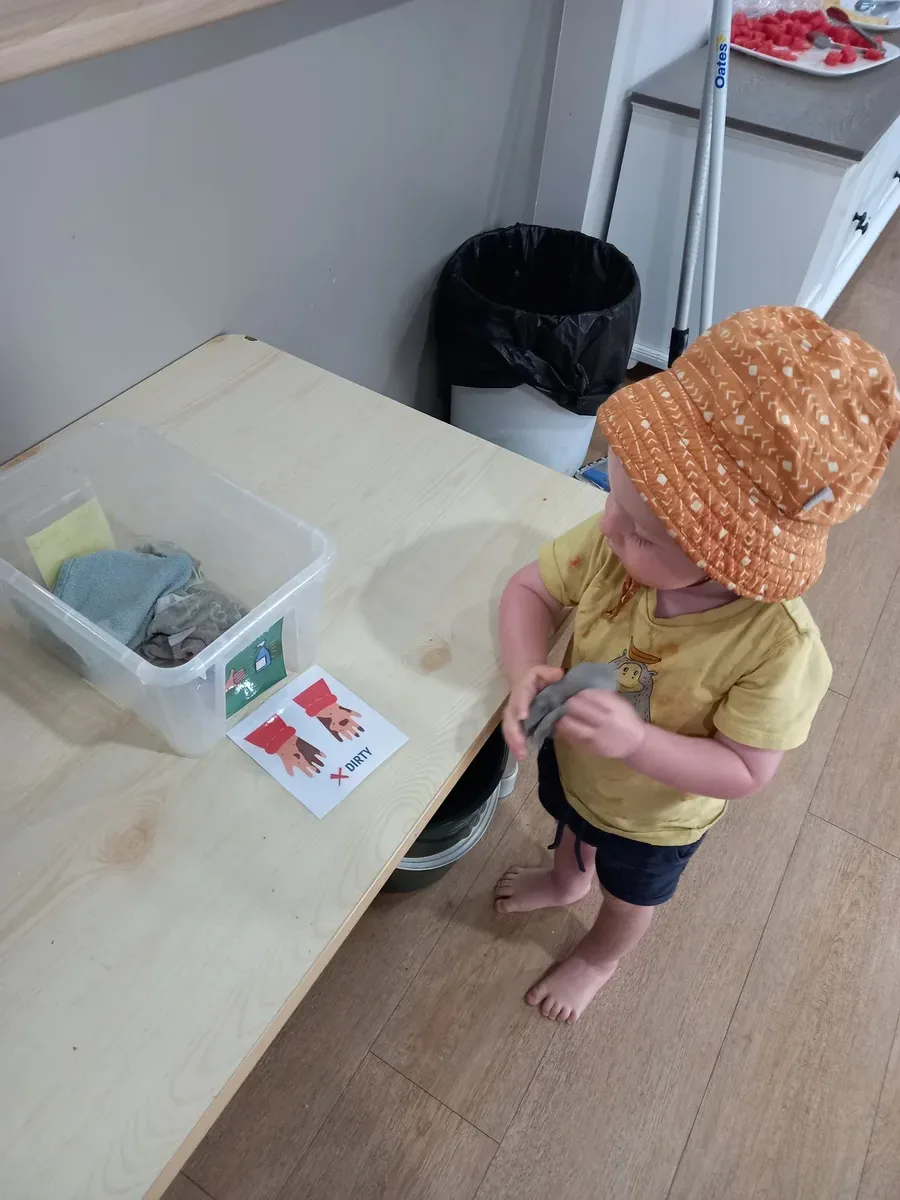
- Give them real tasks — setting the table, carrying their plate, wiping up spills
- Respect their appetite — do not force "one more bite." Trust their hunger cues.
Key Takeaways
- Family-style mealtimes are one of the most powerful learning experiences in early childhood
- Children who serve themselves develop better self-regulation and are more willing to try new foods
- Mealtimes build independence, social skills, language, and a sense of belonging
- At Sonas Woodbridge, family-style dining is a daily practice across all age groups
- You can adopt the same approach at home with simple changes
Want to see our family-style mealtimes in action? Book a tour at Sonas Woodbridge or call (08) 6184 6055.
See play-based learning in action
Book a free tour at any of our 4 Perth centres.